
Homeowner Guide:
Getting the Best from your Air Source Heat Pump
What to expect from your Heat Pump
✔Longer running times. Efficient low temp, long time
✔ Defrost cycles. In winter the unit may steam or pause, its normal.
✔ Gentle, steady heat. Radiators may feel warm rather than hot. This is correct.
✔ Outdoor unit noise. Fan noise is normal, this may increase in cold weather
Use the contact form below to book your
service now
Top Tips
Your Air Source Heat Pump is designed to provide efficient, low carbon heating and hot water all year round. These are our Top Tips to keep it performing at its best.
Keep your Heating on Low and Steady
Heat pumps work best when maintaining a consistent temperature rather than switching on and off like a boiler. Set a steady room temperature (19-21°C) and let the system do the work.
Don’t Expect Radiators to Feel Hot
Radiators will feel warm, not hot — this is normal.
Heat pumps use lower flow temperatures to stay efficient.
Use Weather Compensation
(if enabled)
Weather compensation automatically adjusts the flow temperature based
on outdoor conditions. This improves comfort and reduces running costs.
Avoid Big Temperature Changes
Turning the thermostat up high won’t heat the house faster.
Heat pumps respond gradually, so small adjustments are best.
.
Keep the Outdoor Unit Clear
Check monthly for:
- Leaves
- Debris
- Snow
- Overgrown plants
- Good airflow = good efficiency.
Check System Pressure Periodically
Every 6-8 weeks is recommended. Your installer will confirm the correct range (usually 1.0–1.5 bar).
- Top up if needed
Use Lower Flow Temperatures
For the best efficiency from your air source heat pump, aim to run your system as close as possible to its original design flow temperature. Lower flow temperatures mean the heat pump works less hard and delivers higher efficiency.
Keep Doors Open for Even Heat
Heat pumps work best when warm air can circulate freely.
Closed doors can create cold spots away from thermostats and make the system work harder.
Don’t Cover Radiators or Block Airflow, Avoid:
- Drying clothes on radiators
- Blocking radiators with furniture
- Closing off rooms unnecessarily
This reduces efficiency and comfort.
Find a Schedule That Works for You
Boost modes or short periods of operation can be less efficient than longer running times.
Stick to scheduled heating unless you really need extra hot water.
Expect Longer Running Times
A heat pump may run for many hours a day — this is normal.
It’s designed to work steadily, not in short bursts.
Understand Defrost Cycles
In cold weather, the outdoor unit may:
- Pause
- Steam
- Make a different noise
This is normal and keeps the system efficient.
Quick Checks
Here are some quick checks you can do to keep your heat pump performing at its best. If you are ever unsure or something doesn't seem right, Please contact us, you can use the form below.
01
Heating System Pressure Check
Your heating circuit is sealed and needs the correct pressure to operate. This should be checked and maintained every couple of months. IT is normal for pressure to fluctuate and it is normal to lose pressure over time.
Normal pressure:
1.0–1.5 bar when the system is cold (your installer will confirm your exact range).
If pressure is low:
- Find the pressure gauge (usually near the indoor unit or cylinder)
- Use the filling loop to top up slowly
- Stop once you reach the recommended level
If pressure keeps dropping rapidly after re pressurising:
This may indicate a leak. Contact your installer.
02
Outdoor Unit Airflow Check
Your heat pump needs clear airflow to work efficiently.
Every month:
- Remove leaves, debris, or snow
- Keep a good distance clearance around the sides
- Do not block the front or back of the unit
03
Hot Water Cylinder Tundish Check
Your cylinder has a small viewing window (tundish)
in the pipework. What’s not normal:
- Constant running water
- Continuous dripping
If this happens, contact your installer..
04
Controller and Thermostat Checks
If your heating or hot water isn’t working as expected, check:
- Heating mode is active
- Hot water schedule is set
- Room temperature is set sensibly (19–21°C)
- No accidental changes to advanced settings
If unsure, return to the installer’s recommended settings.
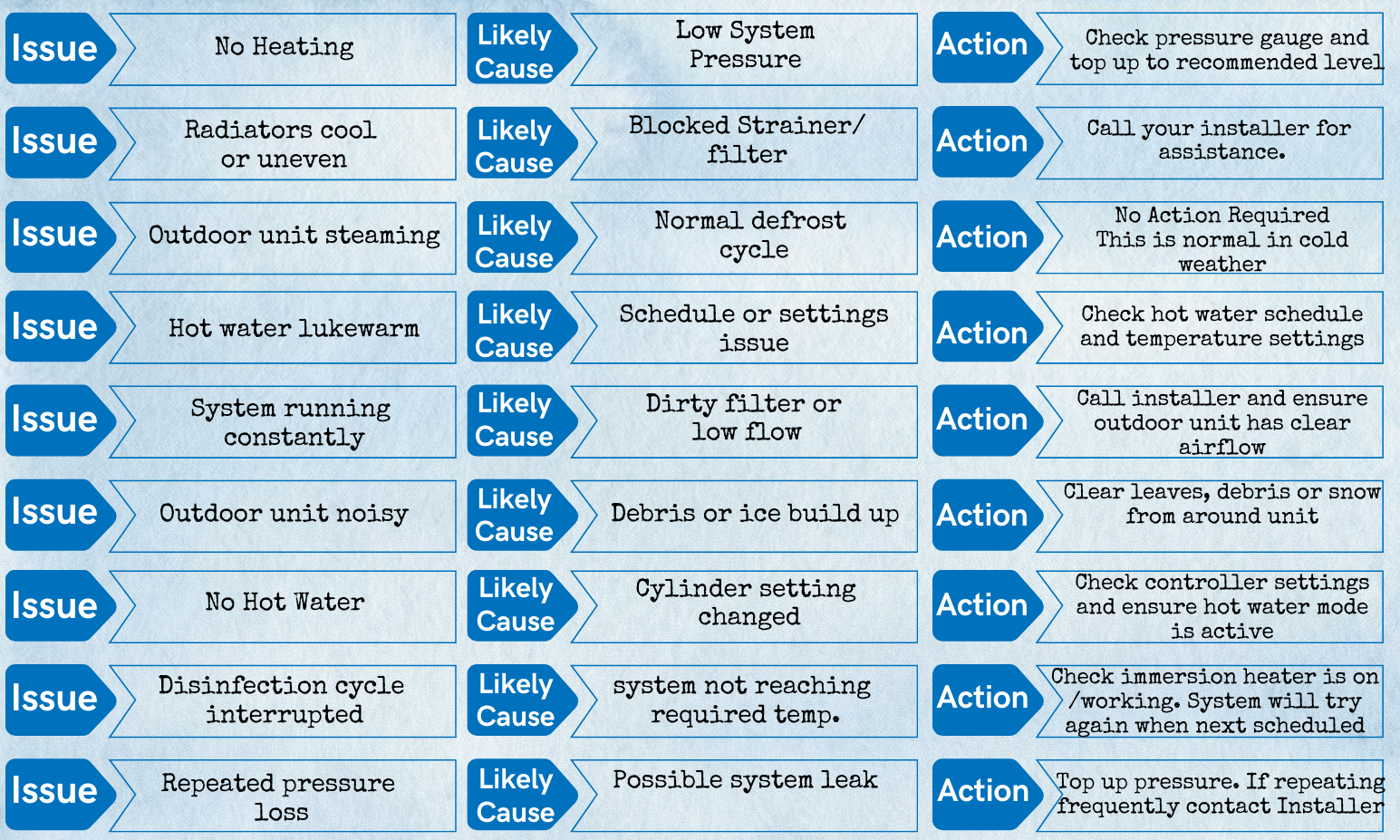
Troubleshooting
What to expect from your Heat Pump
If you are still experiencing problems despite checking necessary actions then please call your
installer or Aftersales representative for assistance.p
Contact us!
Address
Telephone: +44 (0) 7551 632087
E-mail: admin@rj-davies.co.uk
Registered Address: 1 Mellor Meadows Whittington Oswestry Shropshire SY11 4FN
Company No. 10212693 VAT GB 721 004 988